
Borobudur Temple Historical Significance: Understanding Its Lasting Importance
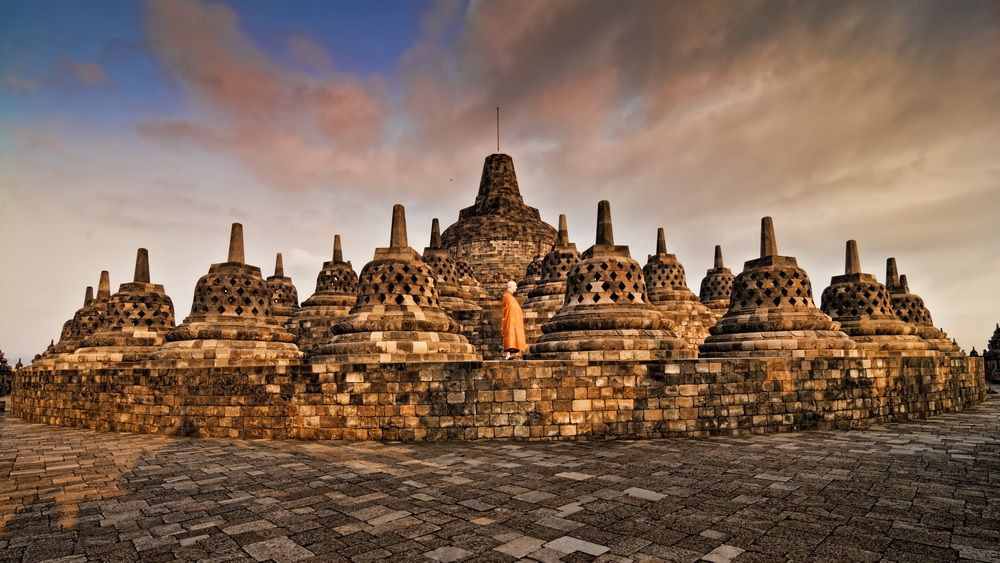
The Borobudur Temple historical significance comes from its connection with ancient Java, Buddhist traditions, architecture, art, and cultural heritage. Built centuries ago, the monument has experienced major changes throughout its history. Its architecture and artwork continue to provide visitors with a way to understand the cultural development of Central Java.
Borobudur Reflects Ancient Javanese History
Borobudur was constructed during the ancient Javanese period, generally associated with the eighth and ninth centuries. Its development is commonly connected with the Sailendra Dynasty and the Buddhist traditions that influenced Central Java.
Creating the monument required extensive planning and skilled craftsmanship. Builders shaped volcanic stone into terraces, galleries, stairways, statues, and stupas.
The scale of the monument demonstrates the organizational and architectural abilities of ancient communities in Java.
The Monument Represents Buddhist Heritage
An important part of the Borobudur Temple historical significance is its role as a Buddhist monument. Its architectural design incorporates religious ideas into the physical structure.
The lower terraces contain detailed reliefs and Buddha statues. Visitors then move upward toward circular platforms dominated by stupas.
This progression creates a physical journey that connects the monument’s architecture with Buddhist concepts.
Borobudur Preserves Ancient Stone Reliefs
The extensive reliefs are another reason for Borobudur’s historical importance. Thousands of carved panels cover sections of the monument’s galleries.
Many scenes present Buddhist narratives, while others depict people, animals, buildings, transportation, plants, and activities associated with daily life.
These carvings provide a visual record of the world represented by ancient Javanese artists.
For travelers who want to explore more about Borobudur’s history, architecture, Buddhist meaning, and interesting details, this Borobudur facts guide offers additional information.
Its Architecture Shows Ancient Craftsmanship
Borobudur’s architecture combines square and circular forms. The lower section consists of square terraces with galleries, while three circular platforms rise above them.
Rows of perforated stupas surround the central stupa at the summit.
The transition between these sections creates a distinctive architectural progression and demonstrates the careful planning behind the monument.
Borobudur Experienced Periods of Decline
The monument eventually became less active and was gradually affected by natural conditions. Vegetation grew around parts of the structure, while weather and environmental factors affected its stone surfaces.
Over time, Borobudur became less visible and less widely recognized.
Its later rediscovery introduced the monument to a much wider audience and began a new chapter in its history.
Restoration Protected Its Historical Value
Conservation and restoration have played an important role in protecting Borobudur. These efforts addressed problems affecting the monument’s structure and helped preserve its reliefs, terraces, statues, and stupas.
Preservation allows modern visitors to experience the architectural and artistic features that survived from ancient Java.
It also helps protect the site’s cultural value for future generations.
Borobudur Remains Significant Today
Today, Borobudur continues to attract visitors interested in history, Buddhism, architecture, photography, and Indonesian culture.
Travelers who want to visit Borobudur and other destinations around Central Java can also explore Borobudur Tours.
The Borobudur Temple historical significance extends beyond its age. Its architecture, reliefs, Buddhist heritage, and long journey through different historical periods make it an important connection between ancient Java and the modern world. Exploring these elements allows visitors to appreciate the monument as both a remarkable structure and a lasting cultural legacy.
