
Difference Between Coconut and Wood Charcoal Hookah
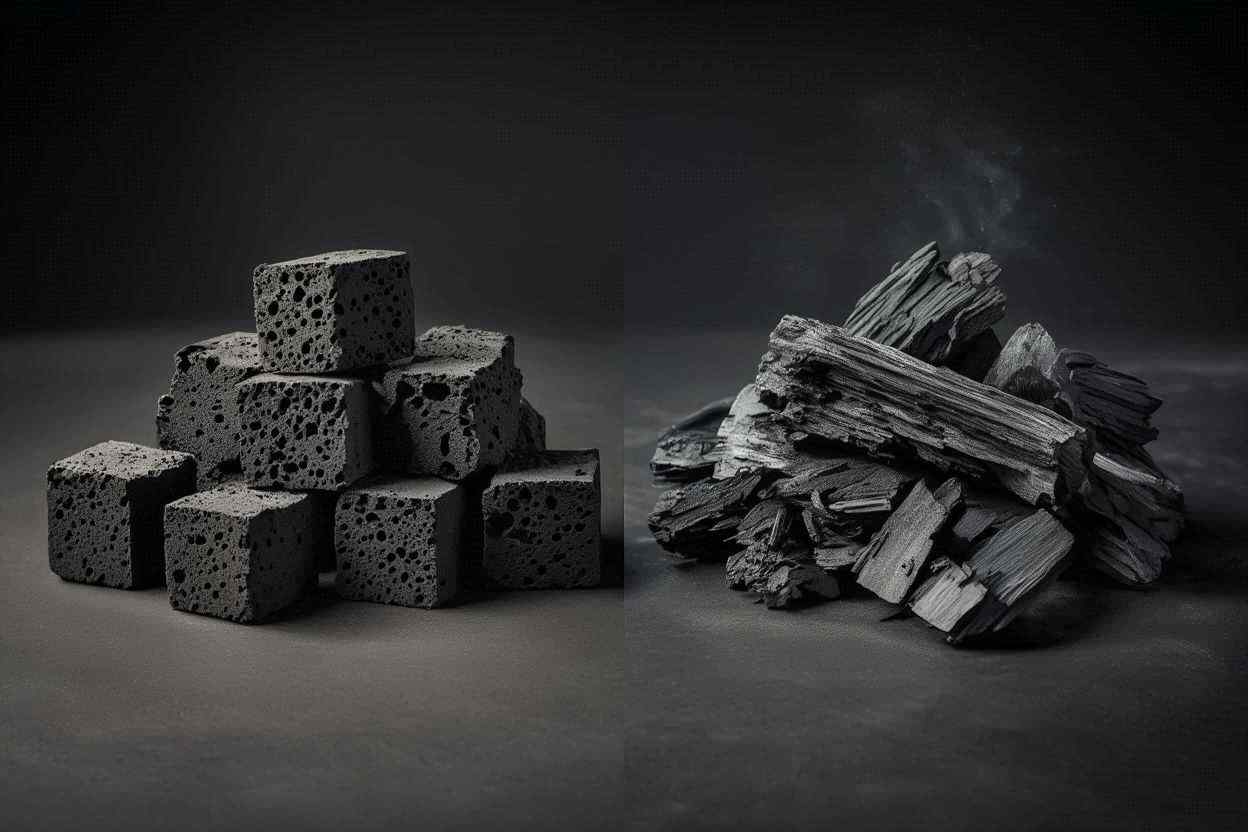
Difference between coconut and wood charcoal hookah is important to understand for users who want better session quality and performance. Since charcoal directly affects heat, flavor, and cleanliness, choosing the right type becomes essential.
To explore more about charcoal differences, you can visit low ash charcoal vs regular charcoal for hookah and access more information at evilmutant.com.
Raw Material Differences
First of all, coconut charcoal is made from compressed coconut shells, while wood charcoal comes from burned wood materials. As a result, coconut charcoal offers higher density and better structure.
In addition, coconut shells naturally contain higher carbon content, which improves burning efficiency. Therefore, the charcoal becomes more stable and reliable during use.
In contrast, wood charcoal tends to be less dense and more fragile, which affects its burning consistency. Because of this, wood charcoal may break easily and burn unevenly.
- Coconut shell for higher density
- Wood material for basic charcoal
- Stronger structure in coconut charcoal
- Less durable wood charcoal
Heat Performance Comparison
Coconut charcoal provides stable and long-lasting heat. On the other hand, wood charcoal burns faster and often produces uneven heat. As a result, users may need to adjust heat more frequently during sessions.
Therefore, coconut charcoal is more suitable for controlled heat applications like hookah, where stability is required.
1. Heat Stability
Coconut charcoal maintains consistent temperature throughout the session. Therefore, users experience steady heat without sudden drops.
In comparison, wood charcoal produces fluctuating heat, which negatively affects session quality and control.
2. Burning Duration
Coconut charcoal burns longer, typically up to 60–90 minutes. As a result, it supports extended sessions without interruption.
Meanwhile, wood charcoal burns faster and requires frequent replacement, which reduces efficiency.
Ash Production and Cleanliness
Coconut charcoal produces minimal ash, which helps maintain airflow and reduces cleaning. Because less ash accumulates, heat transfer remains consistent throughout the session. Therefore, users can enjoy smoother performance.
On the contrary, wood charcoal generates more ash, which can block airflow and reduce heat efficiency over time.
- Low ash in coconut charcoal
- High ash in wood charcoal
- Cleaner setup with coconut charcoal
- More maintenance with wood charcoal
Impact on Flavor and Experience
Moreover, charcoal type also affects flavor quality. Coconut charcoal burns cleanly without strong odors, allowing natural shisha flavor to remain intact.
In addition, clean combustion ensures that the smoke stays smooth and consistent from start to finish.
In contrast, wood charcoal may produce unwanted smells or excessive smoke, which can interfere with the flavor and reduce enjoyment.
As a result, users often experience smoother and more enjoyable sessions when using coconut charcoal.
Common Mistakes When Choosing Charcoal
However, some users still choose wood charcoal due to lower cost. As a result, they experience inconsistent heat and reduced performance.
In addition, ignoring ash levels and burning duration can lead to poor session quality and frequent interruptions.
Therefore, evaluating performance factors such as density, ash content, and burn time is more important than focusing only on price.
- Choosing based on price only
- Ignoring ash production
- Not testing heat stability
- Overlooking material quality
Conclusion
In conclusion, difference between coconut and wood charcoal hookah shows clear advantages in favor of coconut charcoal. It delivers better heat stability, lower ash, and improved flavor quality.
By selecting coconut charcoal, users can achieve cleaner, longer, and more consistent hookah sessions with better overall performance.
